


Introducing solid foods is an important milestone in a baby’s development. As babies grow, their nutritional needs change, and parents begin exploring suitable complementary foods that are easy to prepare and appropriate for their age.
Among traditional Indian foods, ragi has long been used in family kitchens for preparing porridges and other cereal-based dishes.
Today, ragi cereal for infants is a popular topic among parents looking for traditional grain-based complementary feeding options.
Ragi, also known as finger millet, contains important nutrients such as calcium, iron, and dietary fibre. When prepared in an age-appropriate consistency and introduced at the right stage, it can form part of a varied complementary feeding plan.
This guide explains the nutritional qualities of ragi, preparation considerations, and important feeding practices for parents.
What Is Ragi Cereal?
Ragi is a small-seeded millet traditionally cultivated and consumed in India.
It is commonly processed into flour or cereal preparations and used to prepare porridge, dosa, roti, and other foods.
For infants who are developmentally ready for complementary feeding, ragi may be introduced in a smooth, well-cooked form.
Jeevans House offers traditional baby and weaning food products, including Jeevans Ragitone and Decorticated Ragi Cereal Rice.
When Can Babies Start Eating Ragi Cereal?
According to the World Health Organization, complementary feeding generally begins at around six months of age, when breast milk alone is no longer sufficient to meet all nutritional requirements.
Before introducing ragi or any other solid food, parents should look for developmental readiness.
Common signs include:
- The baby can hold their head steady.
- The baby can sit with support.
- The baby shows interest in food.
- The baby can swallow food rather than consistently pushing it out with the tongue.
Breast milk or infant formula should continue according to the baby’s feeding needs.
Parents should consult their paediatrician if the baby was born prematurely, has feeding difficulties, or has specific nutritional concerns.
Nutritional Benefits of Ragi Cereal for Infants
1. Calcium for Growing Bones
Ragi is recognised for its calcium content.
Calcium contributes to the development and maintenance of bones and teeth.
During infancy, adequate calcium intake is important for normal growth and skeletal development.
However, ragi should be part of a varied complementary diet rather than the sole source of nutrition.
2. Provides Plant-Based Nutrients
Ragi contains carbohydrates, plant-based protein, minerals, and other nutrients.
These contribute to the nutritional diversity of a baby’s diet when introduced in an age-appropriate preparation.
3. Contains Dietary Fibre
Ragi contains dietary fibre, which contributes to digestive function.
For infants, the texture and quantity of food are particularly important. Start with small amounts and observe how the baby tolerates the preparation.
4. A Traditional Cereal Option
Many Indian families have used ragi in traditional weaning preparations.
Introducing familiar family foods in suitable forms can help parents build a varied complementary feeding routine.
However, traditional use alone does not guarantee that a food is suitable for every infant.
How to Prepare Ragi Porridge for Infants
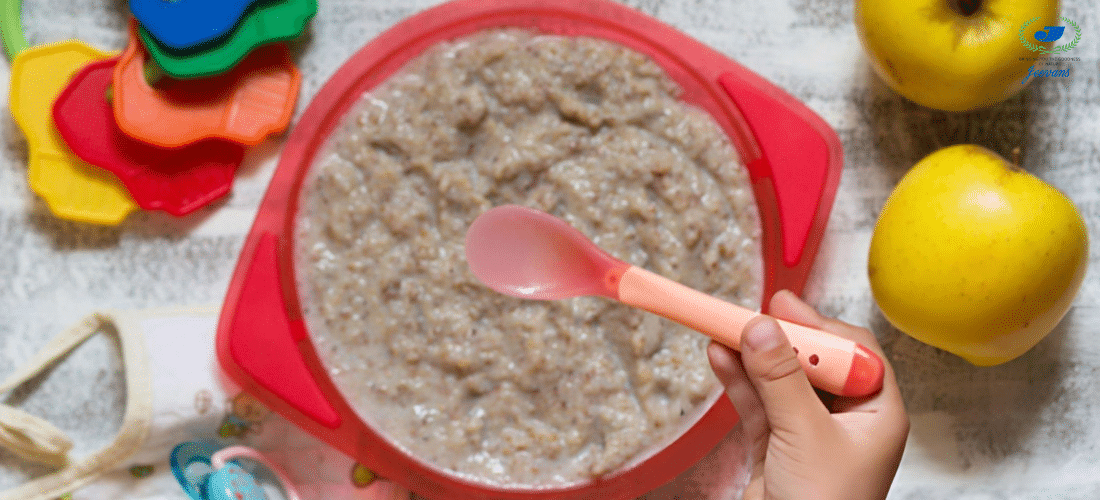
For babies who have started complementary feeding and whose paediatrician has approved the preparation, a simple, thoroughly cooked ragi porridge can be considered.
Ingredients
- 1–2 teaspoons plain ragi flour or an age-appropriate ragi cereal
- Water as required
Preparation Method
Step 1: Mix the flour
Place the ragi flour in a small bowl and add a little room-temperature water to make a smooth paste.
Step 2: Heat gently
Transfer the mixture to a clean saucepan and add more water.
Step 3: Cook thoroughly
Cook on a low flame, stirring continuously to prevent lumps.
Ensure the cereal is completely cooked and reaches a smooth, soft consistency.
Step 4: Cool before serving
Allow the porridge to cool to a safe feeding temperature.
Step 5: Serve a small quantity
Offer a small amount using a clean spoon, following your baby’s hunger and fullness cues.
Do not force-feed.
Important Feeding Safety Tips
Infant feeding requires extra care.
Avoid Added Salt and Sugar
Babies do not need added sugar or salt in their complementary foods.
Avoid sweetening ragi porridge with sugar, honey, or other sweeteners.
Honey should not be given to infants under 12 months because of the risk of infant botulism.
Introduce Foods Gradually
When introducing a new food, offer it in a suitable quantity and observe for possible reactions.
Common signs of a food allergy can include rash, vomiting, swelling, or breathing difficulties. Breathing difficulty or swelling of the mouth or throat requires emergency medical attention.
Maintain Food Hygiene
- Wash hands before preparing food.
- Use clean cooking utensils.
- Prepare fresh food.
- Avoid leaving cooked porridge at room temperature for extended periods.
- Do not reuse food left in the baby’s feeding bowl.
Pay Attention to Iron Requirements
Iron is particularly important during infancy.
Ragi contains iron, but its iron availability can be affected by compounds naturally present in grains, including phytates.
Parents should not rely on ragi alone to meet a baby’s iron requirements. Discuss iron-rich complementary foods and supplementation with the paediatrician.
Is Ragi Cereal Enough for a Baby’s Nutrition?
No single food provides everything an infant needs.
As complementary feeding progresses, babies require a varied diet that may include:
- Iron-rich foods
- Age-appropriate cereals
- Well-cooked vegetables
- Fruits
- Suitable protein-rich foods
- Breast milk or infant formula
Food texture should progress according to the baby’s developmental abilities.
A smooth porridge may be appropriate initially, but babies should gradually be introduced to a range of suitable textures as they grow.
Why Parents Explore Jeevans House Baby Food Products
Jeevans House has a history of manufacturing millet-based food products for families, including traditional baby and weaning food preparations.
Its Ragitone range is part of its long-standing product portfolio.
When selecting any packaged infant food, parents should check the ingredient list, age suitability, preparation instructions, allergen information, and packaging details.
Consult a paediatrician before introducing a new cereal if your baby has specific dietary or medical needs.
Conclusion
Ragi cereal for infants can be a traditional complementary food option when introduced at the appropriate age and prepared safely.
Its calcium content, plant-based nutrients, and versatility make it a familiar grain for many Indian families.
However, infant nutrition requires variety, safe preparation, appropriate textures, and continued breast milk or formula feeding.
With careful feeding practices and professional guidance where needed, parents can explore traditional foods such as ragi as part of their baby’s gradual journey into family meals.